
We're all starting to dress the same, and it has a name, a date and a magazine
In 1893 an article appeared predicting how people would dress over the following century. Among its bets were voluminous breeches and doughnut-shaped hats, which would be all the rage in 1965.
In 1965 something else was all the rage, and it wasn't what we wear now either.
I went to read a chapter about why we're all starting to dress the same, and the chapter opens exactly there: with the wrong predictions.
The future that didn't arrive
In 1960s France, three designers became famous for an aesthetic we'd now call Space Age: André Courrèges, Pierre Cardin and Paco Rabanne. Big geometric shapes, high-tech materials, optimism.
In 1965 Courrèges showed his collection inside a gallery, with the models standing in for the works of art, surrounded by whirling mobiles and kinetic sculptures. All three worked in vinyl, lenticular plastic and Lurex. Cardin went as far as inventing his own fabric, called Cardine.
Two ironies the book points out, which I thought were excellent.
First: those synthetics were the cutting edge, and today synthetics are exactly what we've learned to eye warily on environmental grounds. The advanced material became the problem material.
Second: the modernist design of those years, which was the avant-garde, became the emblem of the Establishment. Midcentury furniture is priced like jewellery. The clothes from that era live in climate-controlled storage.
And the real future, the one we actually wear? Simple separates in neutral colours, trainers that go with everything, comfortable clothes that look like gym kit. The book sums it up in a swap of words that made me laugh: it wasn't unitards, it was Uniqlo.
What happened has a name, a date and a magazine
In 2014, New York magazine published a piece by Fiona Duncan with a title that lands like a small punch: roughly, fashion for people who have realised they're one in seven billion.
Duncan had noticed something among her friends — young, creative, New Yorkers: they were dressing like dads. Or like tourists. Or like dads who were also tourists. Stonewashed jeans, fleece, comfortable sneakers — people who looked as though they'd just stepped off the subway after shopping in Times Square.
The word she used was normcore, and it came from a trend-forecasting group called K-Hole. The book makes a technical correction I thought was worth keeping: K-Hole later clarified that what the article described was closer to another of their terms, acting basic. Normcore was a behaviour; acting basic was the clothes. But normcore is the word that caught, so normcore is the word we have.
Duncan's definition: deliberately embracing sameness as a new way of being interesting, rather than striving for difference or authenticity.
The wardrobe: stonewashed denim, plain caps, unbranded sneakers, bum bags, windbreakers. The icons: '90s Seinfeld, Steve Jobs, present-day Larry David.
Free
Take the Christmas table checklist
It arrives straight away. After that, my newsletter — leave whenever you like.
Why it happened in 2014 specifically
This is the part that explains the rest, and it's about money.
The book notes that normcore flowered exactly when street style, personal-style blogs and Instagram stopped being self-expression and became an opportunity for sponsorship. Every magazine and website had a street-style column. Style bloggers were getting clothing deals. Instagrammers were getting paid posts.
And at that point the instruction to "build your own totally unique personal style" started to sound different. It started to sound like an industry operation.
One of the people interviewed, the editor of a fashion zine, called normcore one facet of a growing anti-fashion sentiment, and described the way he dressed himself — khakis, fleece, old trainers — as a "look of nothing" whose purpose was to absolve him of fashion.
And the most interesting answer came from inside K-Hole, from Emily Segal, who said it wasn't about forfeiting individuality and becoming a uniform mass. It was about welcoming the possibility of being recognisable, of looking like other people — and seeing that as an opportunity for connection, rather than as evidence that your identity had dissolved.
There's a line from their report I read three times: once upon a time, people were born into communities and had to find their individuality; today people are born individuals and have to find their communities.
The irony of the shop that sold it
Gap was founded in 1969 in San Francisco as a countercultural shop. The name comes from the generation gap between hippies and their staid elders.
Then it became the exact opposite: a seller of simple, conservative clothing. But look at what it used as its selling point — the people wearing the clothes.
In the 1980s, at the height of yuppiedom, Gap ran a campaign called Individuals of Style, with Joan Didion, Spike Lee and the gallerist Leo Castelli as models. In the early '90s, another campaign used archive photographs of Miles Davis and Jack Kerouac in khakis.
And in 2014, after the normcore article came out, Gap launched a campaign with the instruction "dress normal".
The shop that sold anonymous clothing spent thirty years proving that anonymous clothing is what lets the person show.
The line that applies to the table too
And here's why I wanted to write this in a house that talks about laid tables.
The author describes looking at photographs of an artists' collective all dressed identically, and the effect on her was the opposite of what you'd expect: the uniformity of the clothing made her focus on the differences between the people. And of the black-and-white portraits in the Gap campaign she says the clothing is secondary — "a blank slate that sets off a personality".
That is exactly what I believe about a table. A pressed white cloth isn't a lack of ideas. A white plate isn't a lack of personality. It's a background.
And if you've taken our quiz of the four table styles, you've seen the same sentence from the other side: every laid table has a style, even when nobody chose one. Plain isn't absence. It's a choice that makes less noise.
Why the same skirt turns up on everyone
This is the purely useful part, and it's the best thing in the chapter.
The book describes a two-part formula behind the items that go viral — the coat "everyone just found online", the leopard-print skirt that took over a neighbourhood, the strawberry dress from TikTok:
- The item has to have a teasingly obscure origin, to give a sense of discovery, rather than looking as though it was pushed at you by a runway or an ad.
- And it has to be instantly legible — one colour, print or shape you can recognise from across the street.
Discovery plus legibility. That's it. Once you can see both parts, you start watching the mechanism work in real time, and it gets easier to decide whether you want the thing or whether you just want to belong for a month.
There's even an Instagram account, @Insta_Repeat, that collects near-identical photographs by different people striking the same outdoorsy poses — the feet stretched out towards the campfire, the hand holding a small bird against a landscape. The individual quest, filed in series.
And one honest correction
The book makes an argument about the word "basic" that I find strong, and I'll tell you plainly that it's an argument, not a measurement.
In the same year and the same magazine, another writer wrote about the difference between normcore, which was celebrated, and being called "basic", which was a humiliation. Her thesis: the word pretends to criticise unoriginality, but what it's actually dismissing is consumption patterns — not consumption itself. The sin isn't liking to shop; it's wanting the wrong brands, the ones that announce themselves loudly and have shareholders to satisfy. The "right" brands are more expensive, subtler and usually privately owned.
In other words: the difference between the two words is class.
I find that reading convincing, and it's only fair to tell you there's another: that "basic" really does describe an incurious relationship with your own taste, independent of price. Both can be argued. What seems hard to dispute is her third point, which is factual — the word is used almost exclusively against women. The male equivalent doesn't exist with the same charge.
What I'm going to do
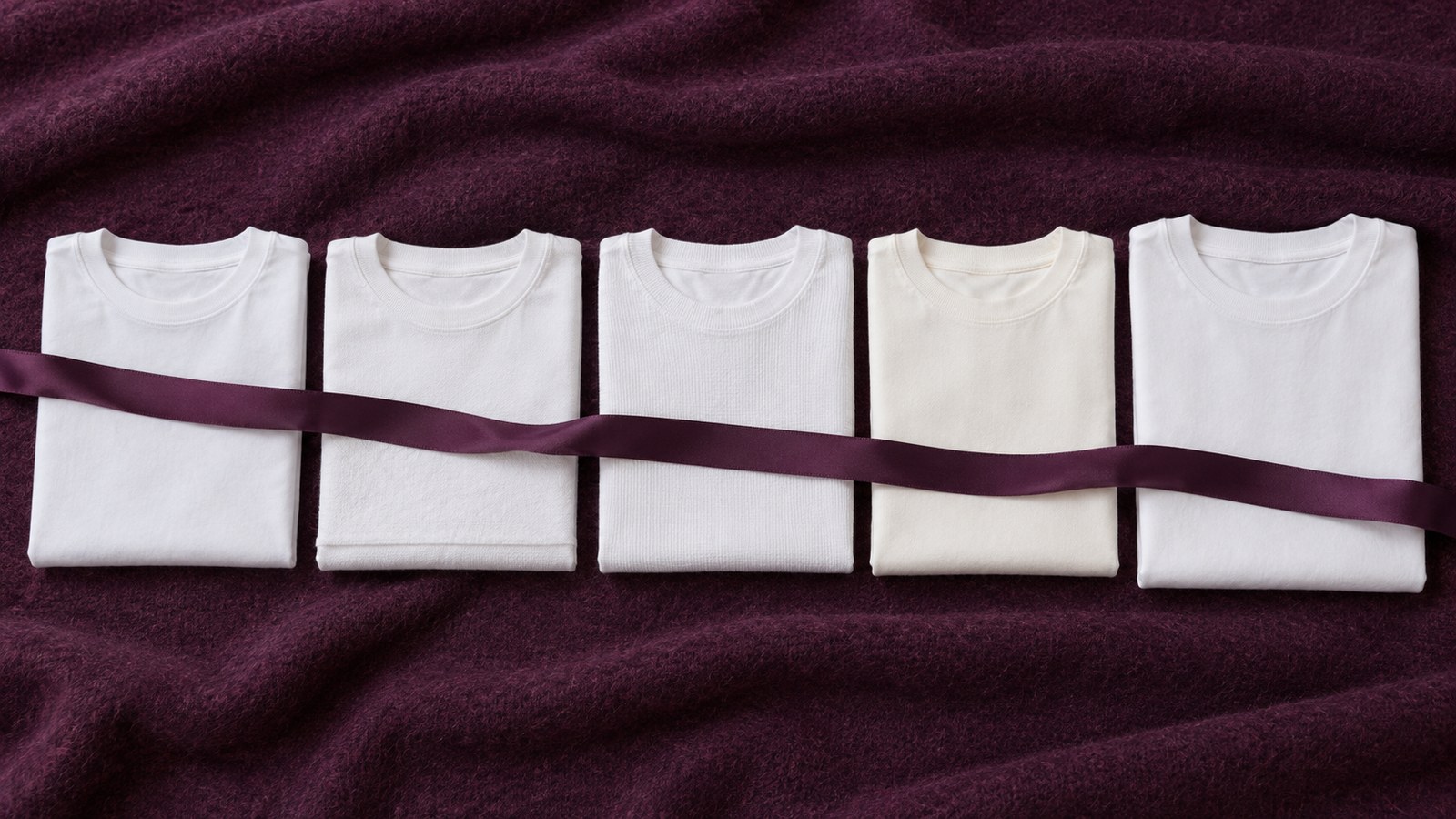
Stop feeling unimaginative about owning three identical white T-shirts. And when an item appears on everyone at once, ask the formula's two questions before buying: is the origin discovery or advertising? And do I want this thing, or do I want to be part of something?
If this subject interests you, effortless French style is a product, and the real mechanism is a uniform. And if you want the old, legal version of all this, it was once literally illegal to dress above your station.
If you'd like the rest of what we're putting together for the season, I've gathered it all on one page, with a table checklist to download.
And if your project is the December table, The Art of Napkin Folding has the classic folds step by step, with the starch detail that decides whether a fold stands up. R$47.00, lifetime access.
Tell me: do you have a private uniform, the combination you wear when you don't want to think? Here it's black trousers and a white T-shirt, five days a week.
Free
Take the Christmas table checklist
Everything that matters on a Christmas table, on a single sheet. Print it, or fill it in on your computer.
It arrives straight away. After that, my newsletter — leave whenever you like.