
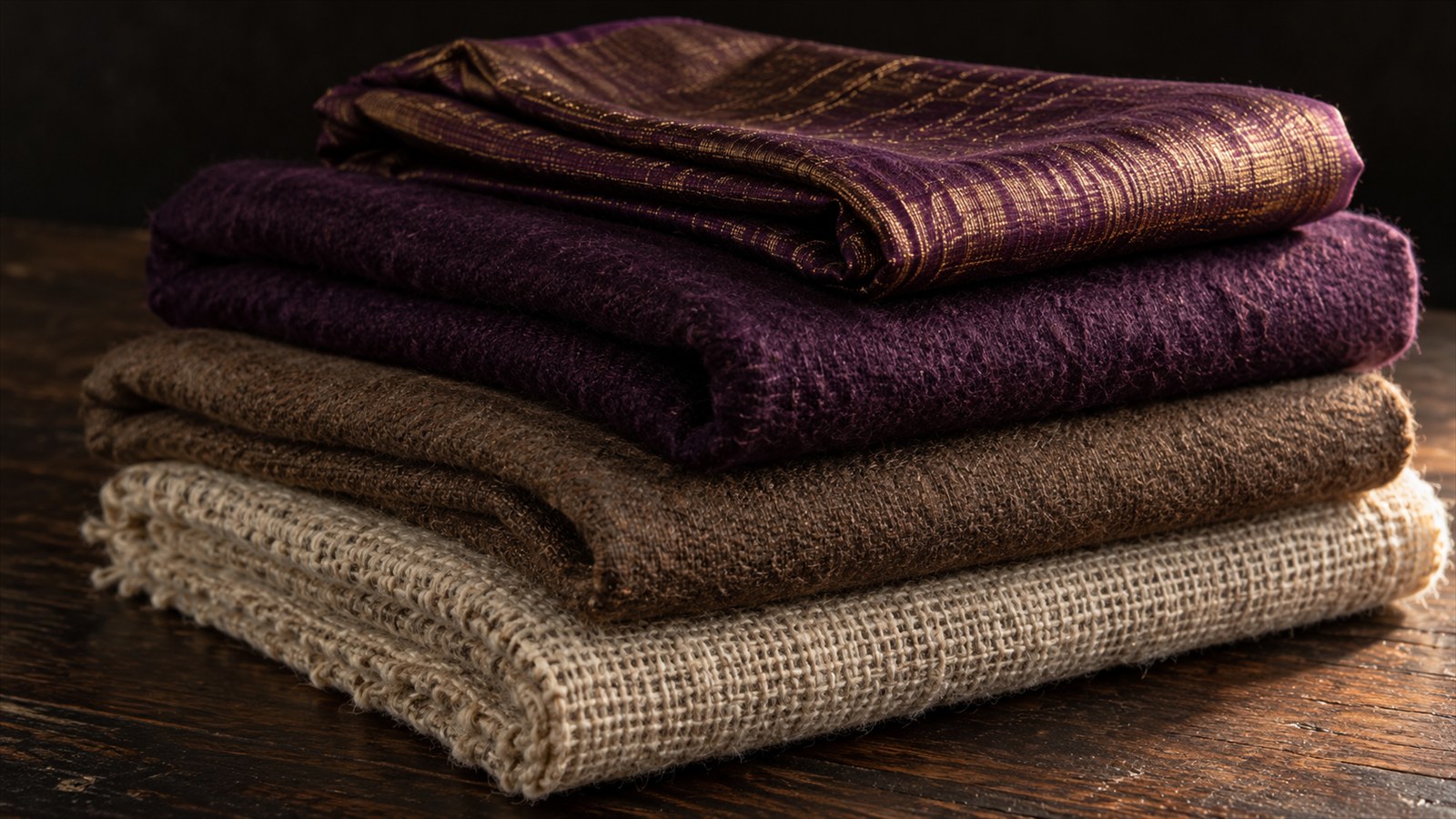
For centuries it was illegal to dress above your class. It never worked.
I have a long-standing irritation with the phrase "that isn't appropriate for the occasion".
It has always struck me as something invented so one person could manage another. This week I found out it was once literally the law.
What happened in the thirteenth century
The sequence is short and entirely recognisable.
First, good fabric became more widely available. Trade growing, more cloth moving, more people able to buy.
Second, the merchant and leisured classes started copying noble fashion. Not slightly: enough to bother people.
Third, and this is where it turns absurd: the copying became a matter for the courts. Laws were introduced to control what people at each social level were permitted to wear. They're called sumptuary laws.
And the book — a fashion history with a very level tone — assesses the outcome in a short phrase: they were rarely effective.
Centuries of legislation about fabric, colour, length and ornament, to control who was allowed to look like whom. And the documented result is that it didn't work.
I read that about four times over.
What clothes were doing in the meantime
The part that made me laugh was realising what fashion was getting up to at precisely the moment the law was trying to hold it down.
The 1390s. Critics complained that necklines had got so wide the bust looked like it wanted to leave. An Italian dress from that moment appears in the book with no belt at all, which was the Italian style then.
1415 to 1417. A chronicler recorded hats with absurdly tall, broad "horns" and long appendages on either side. And this isn't an irritated chronicler exaggerating: the funerary effigy of the Countess of Arundel, made in 1415, records exactly that shape.
Someone looked at it and found it grotesque enough to write down. And the woman had the same hat carved onto her own tomb.
Mantles and sideless surcoats became, in this period, marks of nobility — meaning the garment itself started signalling rank. Which is precisely the mechanism the sumptuary laws were trying to freeze.
Free
Take the Christmas table checklist
It arrives straight away. After that, my newsletter — leave whenever you like.
And now the part I most want you to read
In the portrait van Eyck painted in 1434, the bride is wearing Italian clothing for a wedding in Flanders.
And the book makes one observation about her gown that's worth more than the whole painting: the bulk of the fur lining, when the dress is lifted and held at the front, produces a prominent belly.
Which was, at that moment, the fashionable shape.
Read that again. The desirable silhouette of 1434 included a rounded stomach, and women produced that volume deliberately, with technique, by gathering up the fabric.
One note of honesty: there's a long and unresolved argument in art history about whether the woman in that painting is pregnant. I'm not settling it here and I'm not trying to. What I'm using is what the book states about the dress — that the lining, lifted, gives that volume, and that the volume was the fashion.
But the conclusion doesn't depend on her case. It depends on the fact that there was a century in which the belly was the good part, and in which people worked to have one.
We treat the desirable body shape as though it were a fact of nature. It's a calendar.
This talks to something I've written here about how pink was a boy's colour before it was a girl's: the rule felt natural, was recent, and reversed.
Why this is a December subject
Because December is when clothes become a family topic.
It's the month when somebody comments on what somebody else is wearing. The month of "you're going in that?". The month when a lot of people open the wardrobe and decide in advance that they have nothing suitable — and the word suitable is doing enormous work in that sentence.
So it's worth knowing where the idea comes from.
There is no neutral notion of appropriate clothing. The idea that certain clothes belong to certain people has a documented history, and that history is one of legislation, enforcement and non-compliance. It isn't a history of good taste. It's a history of policing a social border.
And here's what I think is the best news in the chapter: it never worked.
The laws existed, were written, were enforced, and people went on dressing like whoever they wanted to look like. Fashion won that fight by attrition, century after century, out of sheer stubbornness.
This book's limits, said plainly
It's an illustrated reference book, organised by period, with short text beside images. It's excellent for dating a garment and poor for pursuing an argument.
Concretely: it mentions that sumptuary laws existed and rarely worked, but gives no specific law, no country, no penalty, no case. I haven't filled that gap with guesswork, which is why this post is about the mechanism rather than about a statute.
Likewise the complaint about necklines appears as a complaint by critics of the time, unnamed and unsourced. I've treated it as what it is: a record that someone complained, not a document.
If I ever find a specific sumptuary law with its text and its penalty, that's another post and it's worth doing.
What I take back to the wardrobe
Three things, and all three are about not asking permission.
One: when a garment feels too good for the occasion, remember that the phrase has eight hundred years of documented use and that its original job was to stop people looking better than the position they'd been assigned.
Two: your body's shape is not in or out of compliance with anything permanent. In 1434 the belly was the high point of the dress. It will change again, and it has probably already changed twice since you formed an opinion about it.
Three, the practical one: if you have something put away waiting for an occasion worthy of it, December is the occasion. The Countess of Arundel had a ridiculous hat carved onto her own tombstone. You can wear the good dress on a Thursday.
If you'd like the rest of what we're putting together for the season, I've gathered it all on one page, with a table checklist to download.
And if you like this sort of detail, the way Flemish painters filled houses with meaningful objects is in this post about the painted mousetrap — same world, and the clothing in that painting comes straight out of this argument.
For the table the good dress will be sitting at: The Art of Napkin Folding has the classic folds step by step. R$47.00, lifetime access.
Tell me: is there a piece in your wardrobe waiting for an occasion? There is here, and it's been waiting three years.
Free
Take the Christmas table checklist
Everything that matters on a Christmas table, on a single sheet. Print it, or fill it in on your computer.
It arrives straight away. After that, my newsletter — leave whenever you like.