
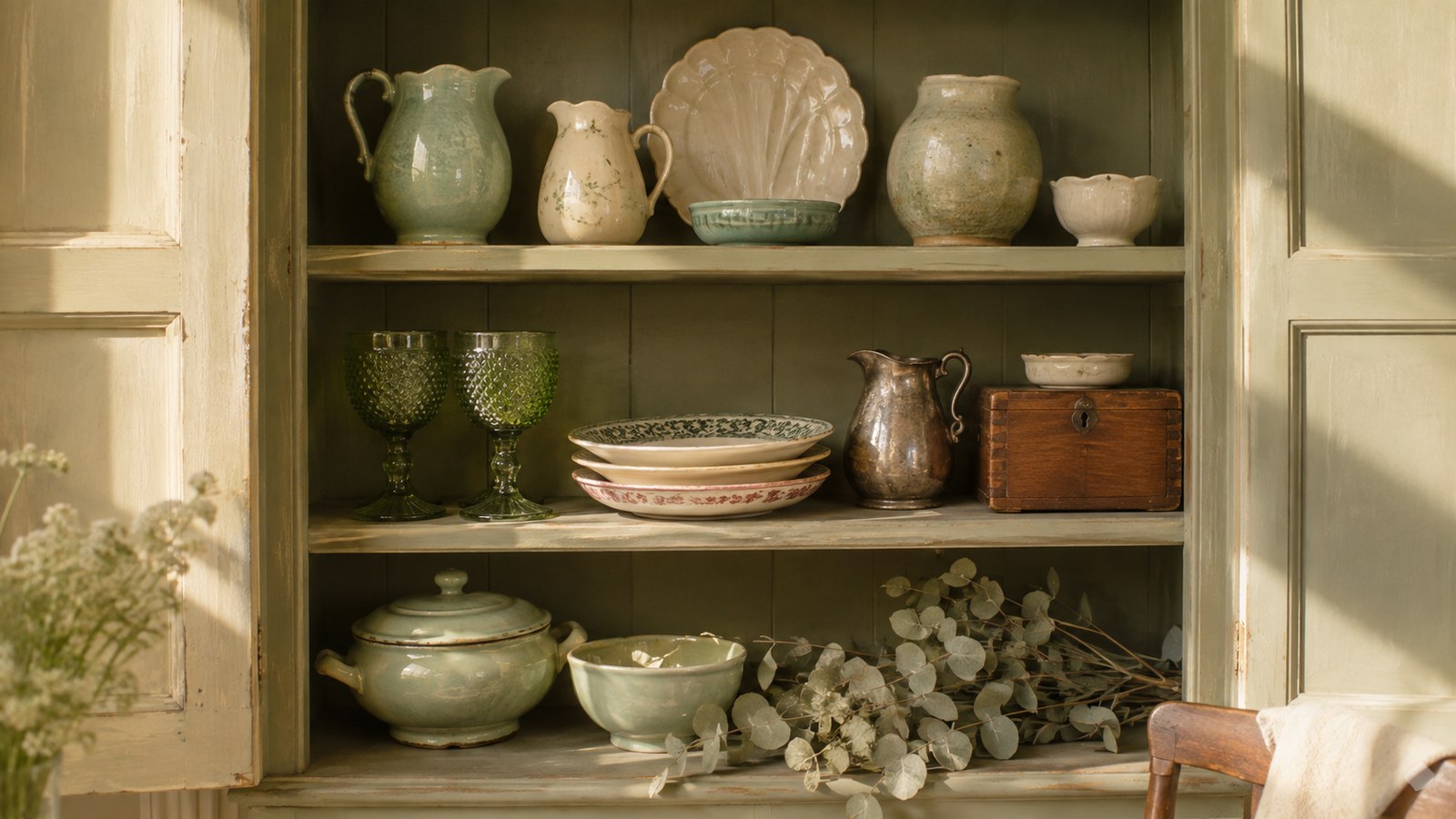
New Furniture Carries a 100 to 500 Percent Markup. Secondhand Carries None.
I always treated hunting for secondhand pieces as a taste. Something faintly romantic you do on a Saturday morning, and which costs more precisely because it's charming.
Then I read something that turned that inside out.
A new piece of furniture arrives in the shop carrying a markup that typically runs between 100 and 500 percent over what the materials and labour cost. That's how retail works; nobody is being wicked. A secondhand piece carries no markup at all. Its price is exactly what one person will accept and another will pay.
Which is why a well-built chair from 1970 frequently costs less than a badly built chair from this year.
Buying secondhand isn't the pretty way to furnish a room. It's the rational one.
First, the words
They confuse people at the market, and they confused me for a long time.
Antique means more than a hundred years old. Vintage means between twenty and a hundred, ideally recognisable as belonging to its era. Modern, in a shopping context, doesn't mean new: it means made during the rise of Modernism, in the early-to-mid twentieth century. Hence "Mid-Century Modern".
Original means made in the period. Reedition means a current manufacture of an old design. A lamp designed in the 1950s and reissued by the same company in 2018 is a reedition, and it usually costs considerably less than an original.
And there's a word I've started using: patina. It means honest wear, the thing time did. Not damage. Biography.
How to tell whether a thing is any good
You need to know nothing about design to start. You need to look and to touch.
A seam down the middle of glass or ceramic gives away mass production.
Too much perfection gives away machinery. If the wood grain is too symmetrical, if the joints are too flawless, it probably came off a line.
Dovetail joints in a drawer suggest hand work.
Weight and edge. Heavy timber with grain visible on the edge as well as the face is usually solid. No grain on the edge means veneer over something cheaper.
Handmade metal reads irregular and organic. Precious metals carry stamps: 18k, 925.
Datable materials. Raffia, Bakelite, lava glaze on mid-century pottery. Each material has its window.
Wear in the wrong place is the warning sign. If a piece is worn where nobody's hand would ever go, somebody aged it on purpose.
Free
Take the Christmas table checklist
It arrives straight away. After that, my newsletter — leave whenever you like.
The three Ms
Materials, maker, market research.
The third is the one almost nobody does properly: market research means looking at sold prices, not asking prices. Anyone can ask anything. What matters is what identical pieces actually went for.
It takes five minutes on your phone while you're standing at the stall, and it changes the conversation completely.
How to actually shop
This is the part that reorganised my Saturdays.
Browse constantly, buy rarely. Early on, the job is looking. That's how you build the mental catalogue that later makes decisions for you.
When something stops you, write down why. The curve of the leg, the colour of the glaze, the shape of the handle. Those notes become your search terms.
Use saved-search alerts. Almost no amateurs use them and almost every professional does. As a side effect you learn the going rate without trying.
Search badly, deliberately. A seller who lists "1950s Marble Coffee Table" already knows what they have. The bargains sit under bad titles and worse photographs. Train yourself to see the object through the yellow light and the cluttered room.
In person, go to the strangest thing on the table first. Then pick it up. Rock the chair, lean on the table, run a finger round the rim of the china looking for chips. Patina is fine. Broken is not.
Read the stall, not just the stock. A tidy stall, sorted by colour and nicely lit, belongs to someone who knows exactly what they have and prices accordingly. The dusty, piled-up one is where the finds are.
On price, ask what their best price is rather than naming yours. Compliment the piece; never pick at its flaws to talk the number down. And bring cash in small notes.
Mixing expensive and cheap is an old technique
There's a story about this I love.
George Stacey, Diana Vreeland's decorator, put her Park Avenue apartment together and placed two cheap picnic chairs in among the antiques. Deliberately.
That wasn't thrift. It was method. A new, shiny piece beside an old, heavy one makes both look better than either would alone.
And there's a shopping shortcut hidden in the same history: look for the women. Several significant twentieth-century designers were historically less recognised than their male colleagues, and market prices still carry that. Cini Boeri, Eileen Gray, Gabriella Crespi, Gae Aulenti, Anni Albers. Same era, same quality, often fewer zeros.
Two lines I wrote down
From a New York dealer called Patrick Parrish, on what to look for in a used piece: "look for honest wear."
And from another dealer, Pip Newell: "look for potential, not perfection."
I wrote both on a scrap of paper and left it in the bag I take to the market.
Where I'd have gone wrong
Two traps.
The first is restoration cost. Having a chair or sofa professionally reupholstered is expensive, sometimes more than the piece. Add that to the price before you decide, not after.
The second is more counterintuitive: on a genuine collector's item, restoring can reduce the value. The wear you want to fix is sometimes the thing proving the age.
What I'd do with a limited budget
I'd buy the bed new, because with a mattress and a frame I want the guarantee. Then I'd spend the rest slowly, on whatever turned up.
New furniture solves urgency. Secondhand solves character, and character doesn't have a delivery date.
Tell me the best thing you've ever found secondhand, and what you paid. I love knowing the price, honestly.
Read next
- The Foundation of a Beautiful Table: The Part Nobody Compliments — How to build a beautiful table slowly, from what turns up.
- A Simple Christmas Table: Beautiful Without the Fuss — Christmas without buying anything new. It works, and it looks better.
Free
Take the Christmas table checklist
Everything that matters on a Christmas table, on a single sheet. Print it, or fill it in on your computer.
It arrives straight away. After that, my newsletter — leave whenever you like.